Stop Relying on LinkedIn: Applying Directly on Career Pages
The biggest job boards feel like the whole market — but they're the most crowded door in the building. The quieter, faster door is the one most people walk right past: the company's own careers page.

You found the role on a big aggregator, hit "Easy Apply," and felt productive — until you noticed the little grey line under the post: over 200 applicants. You weren't early. You were somewhere in the back half of a stack the recruiter started reading days ago, and your carefully written application is now one identical-looking row in a very long list. The board didn't lie to you; it just showed you the same opening it showed everyone else, at the same time.
Here's the thing almost nobody tells you: that exact role usually exists somewhere quieter, where the crowd is thinner and you can get in earlier. It's on the company's own careers page. Applying there isn't some insider hack — it's just walking through the door fewer people bothered to find. Let's break down why the big boards stack the odds against you, and how to flip to the direct route without spending your evenings hunting down a hundred company websites.
Why the big boards quietly work against you
Aggregators are brilliant at one thing: putting one posting in front of an enormous audience. That's great for the company — and rough for you. The moment a role goes live on a major board, it's visible to thousands of people simultaneously, all of whom can apply in two clicks. By the time it surfaces in your feed, the pile is often already deep.
The number that makes this concrete: the average corporate opening attracts roughly 250 applicants, and only a handful ever reach an interview. On a high-traffic board, you're competing against most of those 250 at once. On the careers page — where far fewer people think to look, and where the role frequently appears first — that same job often draws a smaller, earlier pool.
There's a timing edge too. Companies often post a role on their own site the day they open it, then syndicate it out to the big boards over the following days — or rely on the board to scrape it later. So the careers page isn't just less crowded; it's frequently where the job appears first. Apply there and you can be in the recruiter's inbox before the aggregator crowd even knows the role exists.
So why doesn't everyone just apply direct?
Because it's a pain, honestly. The careers-page route has one real flaw: there's no single place to find them. Every company hides its openings on its own domain, behind its own applicant-tracking system — Greenhouse here, Workday there, Lever, Ashby, or some bespoke setup a startup built itself. To work the direct route by hand you'd have to:
- Guess which companies you'd even want to work for,
- Track down each one's careers page (footer link, "[company] careers" search, repeat),
- Read through every listing to see which roles fit you,
- And do it again next week, because openings change constantly.
That's hours of unglamorous detective work — which is exactly why most people give up and go back to the crowded board. The aggregator wins not because it's better, but because it's the only thing that's convenient. Fix the convenience problem and the direct route wins outright.
How CVApplyr makes the direct route the easy route
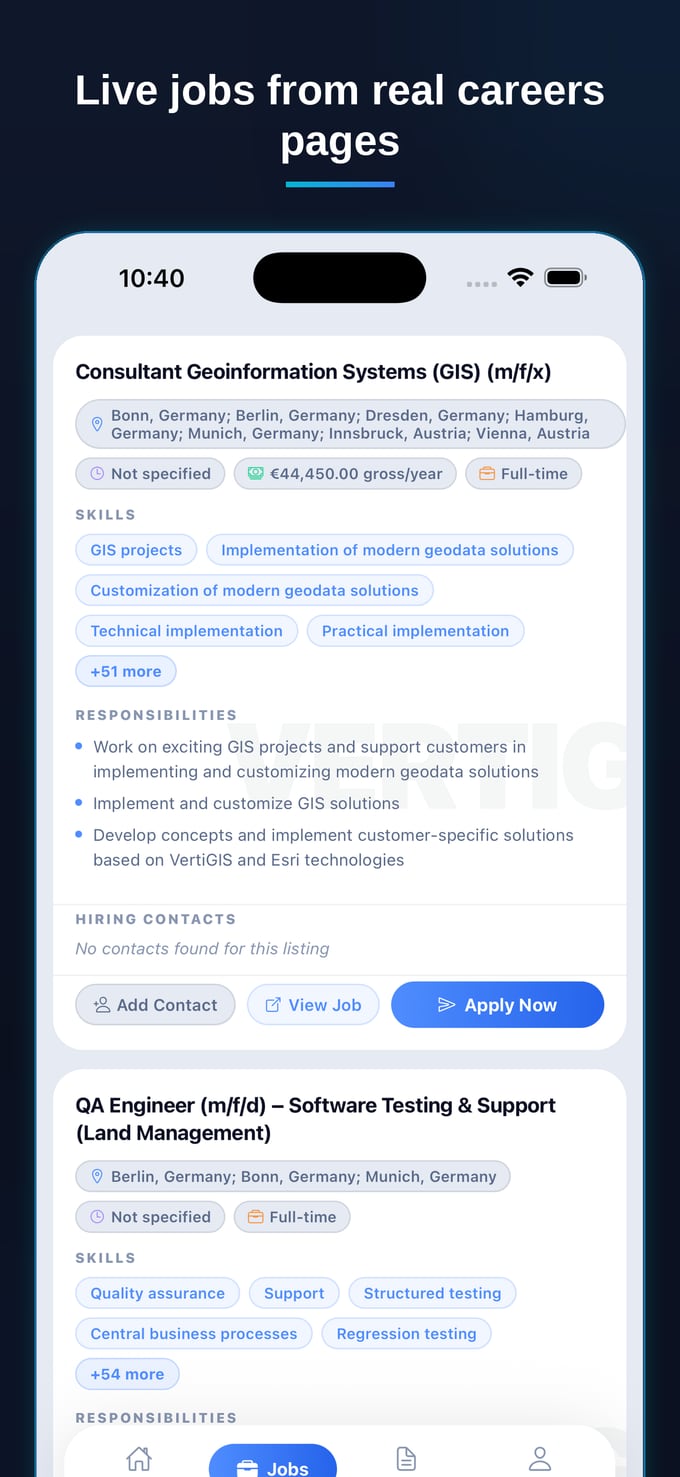
This is the gap CVApplyr was built to close. Instead of you crawling a hundred company sites, CVApplyr discovers live openings directly from company careers pages — even custom, one-off ones — and brings them to you, already matched to your resume. The "thinner crowd, earlier timing" advantage of applying direct, without the detective work that made it impractical.
1. It reads the real careers pages, not just a board's index
Under the hood, CVApplyr looks at a company's own careers page and the applicant-tracking system sitting behind it to pull the currently-open roles. Whether the company runs a standard ATS or a hand-rolled jobs page on its own domain, the goal is the same: surface the live openings as they actually exist at the source, rather than a stale or partial copy that drifted onto an aggregator.
2. It ranks them against your resume
A list of every open job isn't helpful — a list of the jobs you should apply to is. CVApplyr scores each role against your resume so the strongest fits rise to the top. You're not scrolling a firehose; you're looking at a short, ranked list of openings you actually have a shot at, straight from the source.
3. It points you at the real application path
Once you've found a role worth pursuing, CVApplyr sends you to the genuine portal to apply — and, where available, surfaces a recruiter or hiring-manager contact so you can reach a real person instead of vanishing into a queue. That's the direct route end to end: real role, real portal, real human, no aggregator middleman skimming the audience.
The board isn't where the jobs are — it's where the competition is. The jobs live on the careers page, and getting there first is the whole advantage.
What this looks like in practice
Picture your usual job-search evening, flipped. Instead of refreshing the same crowded feed and adding yourself to the back of another 200-person stack, you open a short list of roles that were pulled straight from real careers pages and ranked against your resume. You pick the two or three that genuinely fit, apply on the actual portal while the pool is still small, and — where a contact is available — send a short note to a real person. Same half hour, but you spent it walking through the quieter door instead of queueing at the loud one.
That's the core idea: where you apply changes your odds before a recruiter reads a single word. Aggregators are fine for spotting what's out there. But when it's time to actually apply, going direct — earlier, to a thinner crowd, on the company's own page — is the edge that's been hiding in plain sight.
Apply where the crowd isn't
CVApplyr finds live roles straight from real company careers pages, ranks them to your resume, and points you at the real application path — free to start.
Download CVApplyrFrequently asked questions
Is it better to apply on the company website or LinkedIn?
Usually the company website. A role on a big aggregator is seen by thousands at once, so the applicant pile is huge and often already deep by the time you find it. The same role on the company's own careers page tends to draw a smaller, earlier crowd — and your application lands in the system the recruiter actually checks first.
Why do company career pages get fewer applicants?
Fewer people think to look there. Most job seekers default to one or two big aggregators, while careers pages are scattered across thousands of company domains and harder to find. Roles also frequently appear on the careers page before they're syndicated out to aggregators, so you can apply earlier — while the pool is still small.
How do I find company career pages fast?
You can search "[company name] careers" or look for a Careers/Jobs link in the site footer, then check whether the role is also posted on an applicant-tracking system like Greenhouse, Lever, Workday or Ashby. To skip the hunting, CVApplyr discovers live openings directly from company careers pages for you — even custom ones — and shows them ranked against your resume.
How does CVApplyr pull jobs from career pages?
CVApplyr reads the company's own careers page and the applicant-tracking system behind it to surface the live, currently-open roles — then scores each one against your resume so you see the best-fit jobs first. You apply on the real portal or reach out to a contact, instead of waiting for the role to trickle onto an aggregator.