Career Change: How to Apply When Switching Fields
The hard part of a career change isn't deciding to do it. It's convincing a stranger, in 6 seconds, that everything you did before counts for the job you want next.

You know you can do the job. That's not the problem. The problem is that your resume reads like a biography of the career you're leaving, and the person skimming it for six seconds has no time to translate "managed a busy restaurant floor" into "led a team, owned operations, kept calm under pressure, and hit targets." So they don't translate it. They move on. And you're left wondering why a hundred applications went quiet when you know — you know — you'd be good at this.
Career changers face a unique trap: your experience is real and relevant, but it's written in the wrong language. The skills transfer; the words don't. This guide is about fixing exactly that — translating what you've done into what the new field is hiring for, targeting roles where the overlap is strongest, and applying with a story that makes the switch sound deliberate instead of desperate. And it's about how CVApplyr reframes that story for you, role by role.
Why switching fields is so much harder than it should be
A first-pass resume screen is brutal for anyone, but it's especially unkind to career changers. Recruiters spend roughly six to seven seconds on that first scan (per the Ladders eye-tracking study), and most mid-to-large employers run resumes through an applicant-tracking system before a human ever looks. Both the robot and the rushed human are pattern-matching: does this person's title and keyword history look like the job? For a career changer, the honest answer on a literal read is "no" — even when the real answer is "absolutely."
So the work isn't to invent experience you don't have. It's to surface the experience you do have in the language the new field recognizes. Here's the core problem, visualized: your old field and your new field overlap far more than your resume currently shows.
The four moves that make a career change land
Switching fields well comes down to four deliberate moves. None of them require lying or padding — they require translation. Here's the system, and how CVApplyr handles the heavy lifting at each step.
1. Inventory your transferable skills first
Before you touch a single application, list what you actually do well, stripped of industry context: leading people, owning a number, managing projects end to end, talking to customers, working with data, staying organized under pressure. These are the currencies every field trades in. A nurse's triage instinct is prioritization. A teacher's classroom is stakeholder management. A bartender's rush hour is operations under load. Your old titles hide these skills; your job is to dig them out.
2. Target roles where the overlap is biggest
Not every role in the new field is an equal-distance jump. Some want exactly what you already have, just relabeled. Rather than scrolling endless boards and guessing, you can let CVApplyr surface openings from real company careers pages and score them against your background — so you spend your energy on the roles where your transferable skills line up best, not the ones that need three years of experience you don't have yet.
3. Rebuild your resume around the new field — automatically
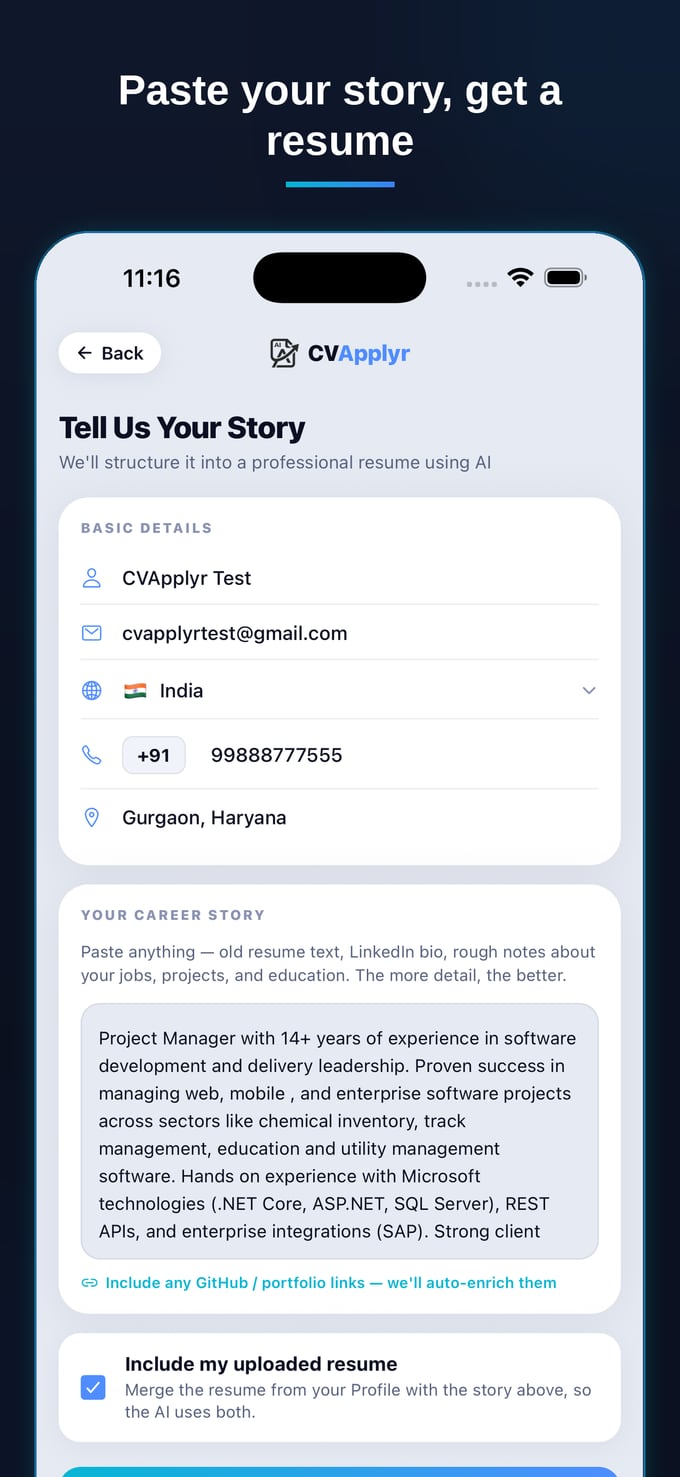
This is where most career changers stall, because rewriting your whole history for every target role by hand is exhausting. CVApplyr takes a different route: you tell it your story, point it at the role you're aiming for, and it reframes your experience around the transferable skills that role wants — leading with a summary that names the new field, surfacing outcome-focused bullets, and translating old-field jargon into new-field language.
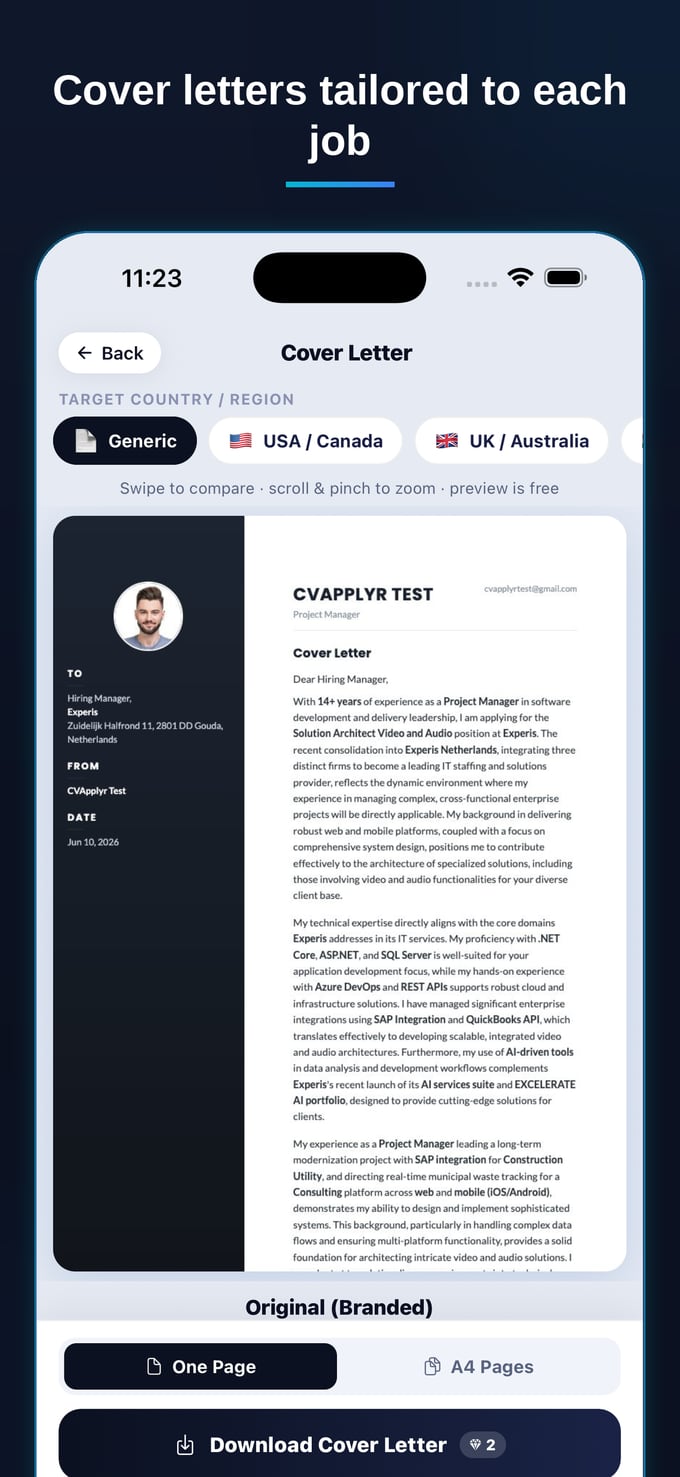
4. Use the cover letter to name the switch — confidently
Don't hide that you're changing fields; address it head-on. A line or two that says why you're moving and what you bring reframes the switch as a decision, not a gap. CVApplyr writes a cover letter tailored to each role that does exactly this — connecting the dots between your past and the job so the hiring manager doesn't have to do the connecting themselves. Done right, your "non-traditional" background reads as range, not risk.
A career change doesn't fail because your skills don't transfer. It fails when the resume makes a stranger do the translating — and they don't have six seconds to spare.
What it looks like when it clicks
Picture the difference. The old way: you stare at a job post for a field you're excited about, then spend an hour wrestling your hospitality resume into something that sounds like operations — and it still reads like a stretch. You send three of those a week, get silence, and start to doubt the whole plan.
The new way: you tell CVApplyr your story once, it surfaces roles where your background overlaps, and for each one it produces a resume reframed around that role's requirements plus a cover letter that names the switch as a strength. You review, adjust a line if you want, and apply — and where the app can surface a recruiter or hiring-manager contact, you reach a real person instead of a portal. Same you, same history. A completely different first impression.
That's the whole game with a career change: you're not becoming someone new, you're finally being read correctly. The experience was always there. CVApplyr just makes sure the right words are there too — every application, automatically.
Make the switch read as a strength
Let CVApplyr reframe your story around transferable skills and tailor every application to the new field — free to start.
Download CVApplyrFrequently asked questions
How do I change careers without starting from zero?
You almost never start from zero. The fastest path is to inventory the skills you already have — communication, project ownership, data, client management — and map them to the new field's requirements. You change the framing, not your whole history. CVApplyr does this mapping for you, reframing your story around the transferable skills the new role actually wants.
How do I write a resume for a career change?
Lead with a short summary that names the field you're moving into, then surface transferable, outcome-focused bullets near the top — and translate industry jargon from your old field into the language of the new one. A skills-forward layout helps more than a strict chronology. CVApplyr builds this for you: tell it your story and the target role, and it reframes your experience to fit.
Should I explain the switch in my cover letter?
Yes — briefly and confidently. One or two lines that connect why you're moving and what you bring is far better than hoping nobody notices. Frame it as deliberate and forward-looking, not apologetic. CVApplyr writes a tailored cover letter that ties your past directly to the new role so the switch reads as an asset.
How does CVApplyr help career changers?
CVApplyr reframes your story around transferable skills and tailors each application to the new field — building a career-correct resume, writing a cover letter that connects your past to the role, surfacing matching jobs from real company careers pages, and even finding a recruiter or hiring-manager contact. It's free to start.